
Strong leadership is the cornerstone of any successful organization, team, or movement. A good leader inspires trust, sets a clear vision, and motivates others to work toward shared goals. The strength of leadership lies not just in authority or decision-making power, but in the ability to listen, communicate effectively, and adapt to change. Leaders who demonstrate empathy and integrity are more likely to earn respect and encourage collaboration among their team members.
In times of crisis or uncertainty, strong leadership becomes even more essential. Effective leaders remain calm under pressure and help others navigate challenges with confidence. They provide direction while being open to feedback, creating a sense of stability and unity. For example, during the COVID-19 pandemic, leaders in healthcare, education, and government were called upon to make difficult decisions while maintaining public trust and promoting safety.
Ultimately, the strength of leadership is measured by the impact it has on others. A strong leader empowers people to reach their full potential and fosters a culture of growth and accountability. Whether in the workplace, in communities, or in schools, strong leadership uplifts and transforms. It turns vision into action, challenges into opportunities, and groups of individuals into unified, purpose-driven teams.
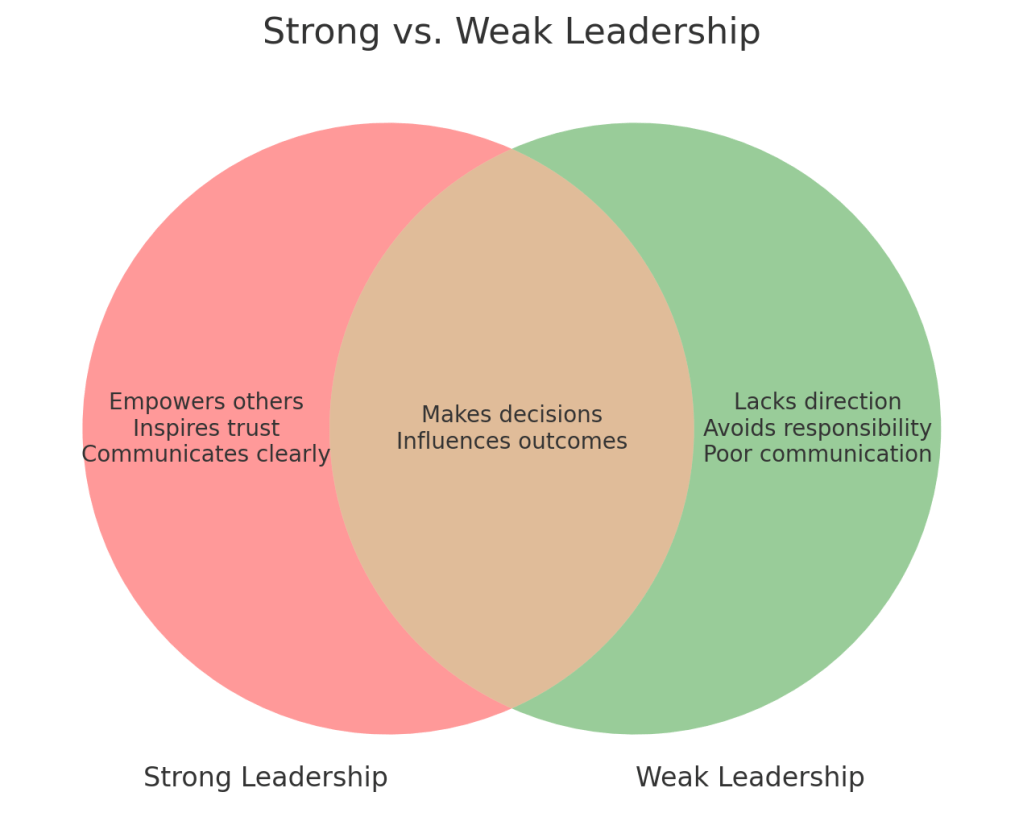
Here is a Venn diagram comparing strong and weak leadership, showing unique traits of each as well as shared characteristics like decision-making and influencing outcomes.
 Education2Business